Pages

Monday, June 27, 2011

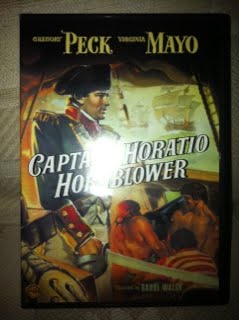
Captain Horatio Hornblower and Its Place in Hollywood History - Reflections and Review by Robert Steven Mack


What is the difference between the old movies and the films of contemporary Hollywood? Some people will argue it is the technology and they are absolutely right. During the Golden Age of Hollywood, film technology (CGI, Greenscreens, etc.) was scarce and limited if even available at all. In fact, it wasn't till the mid-forties that colour film became affordable to studios everywhere. But perhaps the lack of our gain was to their advantage.

The miracle of Hollywood first came into play in the first quarter of the glamorous 20th century. Believe it or not, movies came into the world at a time when it didn't look like they'd amount to anything. That's how it has been through-out Hollywood History: whether it’s casting a star or trying out a new technological invention. It always ends up with those oh so great geniuses rubbing it right under your nose with their “see, I told you so” – acting like your conscience, or the kind I always get from my mother, for example, when I feared my first sailing lesson the other summer and subsequently could not get enough…The concept of a moving picture progressed quickly into an exiting new medium and eventually, a multi-million dollar industry was born.

The transition from silent movies to talking pictures: Have you ever watched “Singing in the Rain?” Before movies could talk, they relied on extravagant costumes, glamorous settings, and superb acting to make them worth the dime people were willing to spend. This worked extremely well and by the time talking came along -pictures that talk...ridiculous!!- well let’s just say the studio executives weren’t impressed. The Jazz Singer changed that and pretty soon the film industry would learn to talk! Indeed, the studio executives liked their new toy and took advantage of this fantastic new invention. So now it was costumes, sets, acting, (later in colour) and plenty of good witty intelligent dialogue. Yet, by the sixties the Hays Code of Hollywood weakened and pretty soon it became a Hollywood rule that sex and violence (plus a good amount of profanity) was the key to a multi-million dollar venue. Away with clever dialogue and beautiful sets. The actors were no longer required to act as the camera and special effect did it for them. And that my friends, is what I propose to be the far-off difference between the dime and the dollar.

So what is the real difference between old Hollywood and new Hollywood? The difference, my friend, is the amount of clever intellectual wit in the dialogue. What today is told by the camera was back then told by the players and their verbal interaction. In truth, watching an old movie is like reading a good book. If you don't know very much, then you will not understand the complicated plots and advanced themes that the oldies have to offer. In the days when movies were only coming into the world, books and plays were the higher medium. In order to compete and reach success movies copied from classics which set the standard for the stories.

Captain Horatio Hornblower: An old film based upon literature was C. S. Forester's classic 1951 adventure film Captain Haratio Hornblower based on his classic books: The Happy Return, A Ship of Line, and Flying Colours. Directed by Raul Walsh and starring Gregory Peck - in a role originally intended for swashbuckling star Errol Flynn – and also Virginia Mayo, Robert Beatty, Terence Morgan, and James Robertson Justise. The author of the legendary adventure series, C. S. Forester wrote the screenplay for the film along with Ivan Goff, Ben Roberts, and Aeneas Mackenzie.

Gregory Peck plays Captain Hornblower, a resourceful, strict, and smart seaman who likes to do things his own way. From start to finish the film will not only captivate with its brilliant dialogue and clever directing; but will make you craving for the books. The film is derived from three books but the smooth plot detours make it unnoticeable. There are adventures when they are supposed to be and humor - the romantic comedy touches between Peck and Mayo who plays his forbidden love interest - when comedy is needed. When Peck's wife dies, you are genuinely touched as we see Peck's character reading his deceased wife's letter and trying to figure out his life. Every element fits in this epic adventure of command, duty, and forbidden love. At times it has a peculiar ring to it for a swashbuckling war film. Its intellectually told not from the "once upon a time there was this guy and these people who did this and then that" but more as a journey through Capt. Hornblower's turning point in life. He is established at first as a strict no-nonsense captain who is resourceful and intelligent. As the film goes on we get an inside view of how his relationships with Lady Barbara (Virgina Mayo) and those who serve under and above him. In short, this film is a pure joy to watch.

Incidentally, on the special features of the dvd I found a Lux Radio Broadcast featuring Peck and Mayo reprising their roles in a cleverly devised radio program adapted from the film into a one hour time frame. I also thought that that the commercials for Lux toilet soap was equally interesting. (Think “soap opera”…haha) In any event, I think anyone who loves an adventure would love this movie. I think that it would also be interesting to read the books.

Copyright 2011 by Robert Steven Mack (all rights reserved!)

Friday, June 24, 2011

Fred Astaire's autobiography "Steps in Time" - Review/Reflections by Robert Steven Mack


While I returned to school last fall, I discovered that of the eighty kids going through sixth grade that there were few others besides me who had seen a film with Fred Astaire short of even knowing who he is. And that’s a shame because Mr. Astaire, who had a career spanning nine decades was one of the greatest performers who ever danced his way into the minds of people like me and inspiring them to go beyond their limits of imagination.

Selected movies: Fred Astaire (May 10, 1899-June 22, 1987) was a dancer, actor, singer, choreographer, and producer. He started out in vaudeville at age five with his sister and worked their way up to Broadway. In 1931 they split up and Fred made his motion picture debut in 1933 with the film “Dancing Lady.” In the same year, he and Ginger Rogers made their first movie together. They would make eight more in the thirties and one more in the fifties. Throughout the forties and fifties Mr. Astaire made several more movies with MGM, Paramount, and Twentieth Century Fox. His last film was Ghost Story in 1981. Some of his films include: Dancing Lady (1933-danced with Joan Fountain), Flying Down To Rio (1933-first film with Ginger Rogers), Top Hat (1935) Swing Time (1936), Damsel In Distress (1937-first film without Ginger Rogers), The Story of Vernon and Irene Castle (1939), You’ll Never Get Rich (1941-with Rita Hayworth), You were Never Lovelier (1942), Ziegfeld Follies (1945), Blue Skies (1946-with Bing Crosby), Three Little Words (1950-with Red Skelton & Vera Ellen), The Band Wagon (1953), Daddy Long Legs (1955), Funny Face (1957-with Audrey Hepburn), Silk Stockings (1958-last film for MGM) , Finial’s Rainbow (1968-last musical film), The Towering Inferno (1974), Ghost Story (1981).

Fred Astaire’s autobiography – Steps in Time:I must say that I did not know what to expect when my mother first got Astaire’s “Steps In Time,” for me in November of last year. At the time I had yet to read a full-blown Hollywood memoire. The book is quite simply written and down to the point. Mr. Astaire cleverly gives his story in a sleek fashion. It is written for anybody who has seen at least five of his films. The great artist starts his book out by talking about his age, temper, and image but after that gives you a factual, sometimes quite humorous account of his life on the set and off. You only wish he could have given you the complete details of his life before he thought his career was over, as the book was written in 1959. Let me say this: you could not get a better account of his life than in Steps In Time.

Copyright 2011 by Robert Steven Mack (all rights reserved!)

Tuesday, June 21, 2011

Debbie Reynold's Memorabilia Collection Auction of Hollywood Treasures - a Special Report by Robert Steven Mack


I have been writing book and movie reviews for well over a year now. When I first started in this business I was being “homeschooled” – via the CAVA indepependant study program by my mother, Diana. During that period, I had the wondrous opportunity to spend quite a bit of my days in Downtown Los Angeles and Beverly Hills where my education flourished under the best possible conditions. L.A. is so full of great places to explore and this is where I would spend a lot of my time either relaxing or studying in museums. One of my favorite places was the Paley Center for Media, formerly called the Museum of Television and Radio but later re-named after William S. Paley, the founder of CBS. Last year, I went back to a splendid brick-and-mortar school for the first time since early third grade. No longer had I much time to do the things I enjoyed doing during my independent studies period.


Surprise at the Paley: School’s out and the first place I’m joyfully off to is the Paley Center for Media in Beverly Hills. I recall, my former routine I had there was simple: Go in, say hi to the always friendly staff, sit down in their library and watch a rare television or radio show, or one of particular interest. In the reliable nature and for the dear sake of the old times I expected to do the same. Not exactly so. When my mother and I got there, we found a completely new and transformed Paley. we saw movie posters, dresses worn by Marilyn Monroe, and a Ford Model T stationed in the middle of the entrance hall with wax figures of Laurel and Hardy perched inside.


The Debbie Reynold's Auction: It turned out that the iconic Debbie Reynolds - Singing in the Rain, How The West Was Won, The Unsinkable Molly Brown - was auctioning off her collection of Hollywood treasures that she collected over the last four decades. I was permitted to look around and was completely stunned over what I saw. Among so many others I saw Audrey Hepburn’s signature dress and hat from My Fair Lady, Ginger Rogers dress from The Barkley’s of Broadway, Judy Garland’s test dress and slippers from the Wizard of Oz, one of Eleanor Powell’s dresses from The Broadway Melody of 1940. Shoes, suits,and dresses worn by Gene Kelley, Donald O’Connor, Debbie Reynolds, and Jean Hagen from the beloved classic Singing in the Rain. Dresses from Shirley Temple in The Littlest Rebel, Deborah Kerr’s black dress from An Affair to Remember along with poster, set pieces props signed by their star, and lobby cards. Marilyn Monroe’s dresses from the films River of No Return, Gentlemen Prefer Blondes, There’s No Business Like Show Business and most ironically her famous dress from The Seven Year Itch which went at a starting price of $1,000,000 to $2,000,000! It was almost too good to believe: Old relics of movie history before my very eyes. The memorabilia themselves were amazing; yet, it was their fate that concerned me. Why, you might ask, was Debbie Reynolds going to auction of these rare treasures instead of putting them all into a museum for the world to look at and admire? Well, Ms. Reynolds apparently did have a museum located at her hotel/casino in Vegas but due to financial distress was not able to keep it for herself. Unable to find a backer, she was painfully forced to auction it away. The relics of Saturday’s auction were only 1/7 of her collection and there will be another auction in December. Hopefully, she can make enough money off of the first and/or second auction that she will not have to give it all away. After realizing what I had missed over the past couple months of being away at school I decided to come back there again before the auction. Which I did twice - two times the following day and then Saturday for the auction. During my second visit on Thursday, I was fortunate enough to catch a glimpse of Debbie Reynolds herself who dropped by the Paley just before closing time. I speechlessly got her autograph and in return gave her one of my calling cards. I shan’t likely forget that experience! My mother, Diana, was very surprised and touched by the memorabilia as well. She wanted Cary Grant’s John Robbie suit and Grace Kelley’s casual dress both from the Alfred Hitchcock classic To Catch A Thief . I wanted Gene Kelley’s tap shoes or at least a poster. My father, who joined us on Friday for the third visit, was too busy worrying about how much all this would cost to want anything. I’d still like to know what out of the collection he would want - I must remember to ask him. On Friday, my father and I found a film crew filming a documentary for Debbie Reynolds. The crew was interviewing fans on what they thought of the collection. My love for being in front of the camera took hold of me and before I knew it I was being interviewed too. “Watching these old movies as a child and now seeing all these costumes and props and relics from the past and knowing that they’re going to be auctioned away this Saturday is really something that gets your thoughts going”… is approximately what I told the cameras that day topped of with a sincere thank you to Ms. Reynolds for entertaining us all. I don’t know if they’ll use it or not but I enjoyed being interviewed. After the excitement of the previous incident my father bought me a signed picture and brochure from Ms Reynold’s hotel to which I was grateful for, especially because I hear they are no longer in print!


The Big Day: Saturday came and once again the whole family woke up early and piled into the car and drove to the Paley for the auction. Judy’s test dress from the Wizard of Oz went for $910,000, or almost a million! It was the result of a long and suspenseful bidding battle between a British and Japanese bidder. Curiously, my father noted, that there were only a select few actually bidding and even fewer actually getting anything. This is apparently because many collectors attend auctions such as this one in order to see who gets what and so on. Debbie Reynolds must have been pleased because many of the items, such as posters and costumes -Marilyn Monroe’s dress went for $ 5million – went for hundreds of dollars above the initial asking price. For example, a poster originally priced $ 200 would rise to the price of $1500. My father reported that nothing went for under $1000. Fortunately, a lot of the same memorabilia were bought by the same bidder. We can only hope that all these items will go to a healthy, safe harbor.


Copyright 2011 by Robert Steven Mack (all rights reserved!)

Monday, June 13, 2011

Once Upon A Mattress: Reflection and tap dance special by Robert Steven Mack


For many years I have performed in such theater plays including comedies, dramas, lovesick romances, and jestful musicals doing everything from joining the Nazis as Rolf in the Sound of Music to selling newspapers on the street as Less in The Newsies. I have enjoyed playing Romeo and Peter Quince in a compilation of Shakespeare classics as well as playing the insecure unfortunate Charlie Brown in You’re a Good Man, Charlie Brown. The latter impersonification has remained to this day one of my favorite roles; indeed, I have high hopes to someday reprise the role of Charlie Brown in a film of my own. I must say ,however, that after almost five years of being with my splendid Kids On Stage troupes, I have never up until known and experienced a play as stupendously, scrumptiously, delightfully entrancing and gratifyingly wonderful to be in as Once Upon A Mattress.

Background: “Once Upon A Mattress,” a satire of the legendary “Princess and a Pea” fairy tale and having starred Carol Burnet in the lead role of the very un-lady like Princess Winifred of the Swamp land who comes from a-far to wed the Prince. “Mattress” debuted in May of 1959 as an off-Broadway musical comedy and later moved to the Alvin theater at Broadway. The hit show was directed by George Abbot and choreographed by Joe Layton, with music by Mary Rogers, lyrics by Marshal Barer, and a book by Jay Thompson, Dean Fuller, and Marshal Barer. The cast included Joe Bova as the lovesick Prince Dauntless who longs for a princess to marry. Jane White stars as the domineering Queen Aggravain who strongly disapproves of her son’s wishes to marry. Robert Weil personified the ruthless, cunning, and evil wizard who conceives unfair tests that a princess must pass before she can be allowed to marry Dauntless. The rest of the original Broadway cast included Allen Case as the gallant Sir Harry, Anne Jones as the damsel in distress Lady Larken, Jack Gilford as the silent but debonair King Mousemus, Matt Matox as the Jester, and Harry Snow as the Minstrel. On the original tour Carol Burnet was replaced by television icon Imogene Coca and the King by the legendary Buster Keaton.

Our show: In the show we put on at Kids on Stage - although I appeared in two different versions playing also King Mousemus - I took on the role of the Prince with a talented ensemble of actors, singers, dancers, and comedians. The musical was primarily under the direction of the always marvelous Kaitlyn Black who put the show together, but subsequently Cari Derbise put her unique finishing touches on the show. I remember the hustle we had the night we previewed the show. It was a night to remember! Still the following show was wonderful and the following show was even better! Two great shows in a row - what a way to go! We had the routine in us, it was second nature by then! I loved my role as the Prince: I was singing, dancing and having a hell of a good time! I felt it could go on forever, that I could keep reinventing my role and the show even better with each performance. As I walked through the theater after the curtain fell, I thought how great the show had been and what a shame it was over.

Future: A nice surprise came to me, however, when Beth Blaney, the president of the wonderful Kids On Stage program that I have been a part for so many years talked to me about what a shame it was to waste all the wonderful choreography and talent and asked me if I was able to return this summer to showcase it elsewhere! I sincerely hope that everyone will return and we can indeed take the show to the road. Well, whether it happens or not, I want you to know that the “Once Upon a Mattress” cast all lived happily happy, and thoroughly satisfied.


I wish to thank Kaitlin Black and Cari Derbise, our directors whom we could not have done it without!

Copyright 2011 by Robert Steven Mack (all rights reserved)


Monday, May 23, 2011

Dick Van Dyke: My Lucky Life In and Out of Show Business" and Chitty Chitty Bang Bang - Book and Movie Review by Robert Steven Mack

I know that I was about four or five years old when I watched and enjoyed those Disney movies down in the basement of our Michigan home in Ann Arbor. Countless times I would switch on that little tv with those box-like VHS's piled up on top and I would sing and dance along with one of my favorite Mary Poppins’ tunes. A lot has changed as we went through that decade. VHS's have left the main home video product line to be replaced first with DVDs, and then with such up-to-date contraptions as the i-pod or the i-pad. Yet, I still have that little tv and still have those VHS's piled up on top of eacher other. Although there are way more than when I started. I still dance and sing along with Dick Van Dyke in Mary Poppins and Chitty Chitty Bang Bang. One of my biggest role models, I thought and still do think of Mr. Van Dyke as one of the greatest actors and dancers who ever came to make me laugh. In fact, it was he that inspired me to become a performer myself. As the years go by I learn more and more about Hollywood and its performers and have allowed myself to acquire and collect ever-more titles from local library sales. For example, I was eight years old when I first saw Mr. Van Dykes classic sitcom “The Dick Van Dyke Show” (1961-1966). And it was only a little time later that I saw him in his first film role as Albert Peterson in “Bye Bye Birdie.” In fact I was even lucky enough to see him twice in person. The first was many years ago at Disneyland when he made a speech. I only saw him from afar. The second time was quite recently actually: It was at Barnes and Noble at the L.A. Grove for a book signing and was just in time to walk down the hall with him as he was exiting the signing area. I can say just from watching that he never looked better. He joked with the audience and was very kind to everyone. From that event I got a signed copy of Mr. Van Dyke's memoir “Dick Van Dyke: My Lucky Life In and Out of Show Business.” Now that I read his autobiography and I know so much more about his life, I can only assert that his charmingly elegant nimble body and his multi-talented personality will never grow old.
Dick Van Dyke’s CV
Dick Van Dyke was born in 1925 in West Plains, Missouri and reached success when he starred in the Broadway musical “Bye Bye Birdie.” In 1963 he would reprise his role from the original stage production on film with Ann-Margret and Janet Leigh. From 1961 to 1966 he would star in the family sitcom “The Dick Van Dyke Show,” while also in 1964 he would play Bert in Walt Disney's Mary Poppins - a signature family classic. When the show ended in 1966 he turned to the role of an eccentric inventor who invents a magical car based on an Ian Fleming children's novel “Chitty Chitty Bang Bang” - another family favorite. Other film, stage and tv credits include “What A Way to Go!” (1964), “The Art of Love” (1965), “Lt. Robin Crusoe”, U.S.N., Never A Dull Moment (1968), “The Comic” (1969), “Some Kind of Nut” (1969), “Cold Turkey” (1971) “The New Dick Van Dyke Show” (1971-1974), “Van Dyke & Company” (1976), “The Music Man” (Broadway revival-1980), “The Van Dyke Show” (1988), “Diagnosis: Murder” (1993-2001), “The Dick Van Dyke Show Revisited” (2004), “Night at the Museum” (2006), “Curious George” (2006), “Night at the Museum 2: Battle at the Smithonian” (2009), and many more! Throughout his career he has been honored with A World Theater Award, a Tony Award, a Grammy, and four Emmy Awards.

Chitty Chitty Bang Bang
Chitty Chitty Bang Bang is a 1968 family musical starring the impeccable Dick Van Dyke, the lovely Sally Ann Howes, and the comical Lionel Jeffries. Produced by Albert R. Broccoli (James Bond movies) and directed by Ken Hughes the film is about an eccentric widowed inventor Caracicutus Potts (Dick Van Dyke) who invents a magical, flying, floating car that leads him, his children, and his lady companion (Sally Ann Howes) on a magical fun-filled adventure in a far-off land. Despite an arguably poorly-developed plot - perhaps because much of the original plot was changed from the actual Ian Fleming novel-such as their names being Pott instead of Potts, and Caracticuses wife Mimsie Pott. Another was that the original adventure involved gangsters, not pirates and castles, and that Mr. Pott had for much time served in the navy. Yet, this is a fun-filled tuneful merry musical with an excellent score by the Sherman Brothers! I have always enjoyed this happy clean movie whistling its marvelous tunes whilst I bike ride. This includes its energetic title song that was nominated for an Oscar. I shall continue to do so for many years to come!

Dick Van Dyke's Memoir
As I mentioned before, I was at the Grove for a book signing recently. More precisely, my dad was at the actual signing and got the book autographed for me while my mother and I fought through L.A. traffic coming from my rehearsal of one of my plays. Luckily, I arrived just in time to walk down the hall with him and was happy to have acquired Dick Van Dyke's new show business memoir “Dick Van Dyke: My Lucky Life In and Out of Show Business.” I started reading it right away in the dimly-lit car as we drove home from the exhilarating event and was up the rest of the night and continued the next morning; I could not easily put that book down. Yet, as my busy school week went by I had no time to continue one of the most fascinating books of my life. Finally I read on and finished the book on Saturday. Immediately after I was done I shared some facts and memories from the book with my mother and father – like, for example, the time an earthquake hit while he was doing his nightclub act, or the time Mr. Van Dyke's car broke down on the highway and a dozen fans, policeman, and auto repair men offered him a lift, or requested an autogragh,or introduced themselves as dancers and had Dick brush up their act. My parents, who also admire Mr. Van Dyke, enjoyed listening to my newly acquired intelligence about this extra-ordinary man. The book gave me a wonderful factual personal insight on Mr. Van Dyke's career, and also on his personal problems such as home life, and his struggle with his addiction to cigarettes and alcohol. Yet, this memoir is one of the cleanest showbiz autobiographies I've ever read. “Cuss” word were few and were placed in exactly the right places.

Upon reading his book, I come away with the impression that Mr. Van Dyke is humble and modest in his writing as he never attributed himself to being famous or talented – despite the fact that he did mention once that he was never very good at handling fame. This book is genuinely insightful with humorous remarks and sorrowful moments. He has given us nothing but the truth and has given credit to those who deserve it. If you want a story on Dick Van Dyke's life, well... he's given it to you!

Copyright 2011 by Robert Steven Mack (all rights reserved!)  

Sunday, May 22, 2011

Onion John - A Book Review by Robert Steven Mack


I have always maintained the idea that all books can be turned into films. That turned out not to be so.

It was my birthday, and I turned twelve years old. As most birthdays it was an undeniably happy and busy day of action. I got up knowing of the usual festivities but could only hope for an extra good time. It turned out ,however, that during the early morning hours, while my parents were fast asleep, I was to be kept prisoner in my own room - captivated by my wondrous book and movie collection. It may sound dramatic but our tiny tv had been moved into my media room. There were also plenty of books to muse over, and even my tiny little laptop that I am utilizing right at this very second. Sometime later, my aunt dropped by for some breakfast cake and tea in celebration of my birthday. As usual, she decided to spoil me and brought me a whole bag filled with movies plus a picture book on television she got at a library sale. My other presents weren't half bad either. I got puzzles, a DNA set, movies, a book on the art of illusions. My mother, Diana, gave me the book on "Onion John."

"Onion John" is coming-of-age Newbery award winning book about father-son relationships, and is a children's book written in 1959 by Joseph Krumgold. I was unable to read it when I first got it however, (on January 16, 2011) due to my stack of other books impatiently waiting for me to read them: going to my school library and my local library book sale every Saturday and Sunday really has an effect! I later decided to read it for an oral book report that was coming up in my school. What fun! I needed a good captivating book. So at last, sometime in late April I cast my milk and cookies aside (onto the table) and turned to the first page of the book; and this is what I found:

"Onion John" is about Andy Rush, an intelligent seventh grader living in the small town of Serenity. Andy likes living in Serenity. He likes the people, the places, and playing on the Serenity baseball team. His father, Andy Sr., thinks otherwise and already has big career plans for Andy. And this is when Andy meets up with the eccentric town weirdo, Onion John, who speaks in his own mysterious language that no one can understand but Andy Jr.. The two soon become best friends. Andy (and his friends) love to listen to John's stories and hear John play his beat up old fiddle. Andy also enjoys to participate in John's guaranteed Rainmaking ceremony. Most of the parents don't understand Onion John. One grown-up in particular ,Andy Sr., does not like John and is full of prejudices. Andy Sr. does not approve of the kids spending the amount of time with John they have spent. Oddly and rather ironically, Onion John soon befriends Andrew Rush Sr. and that is that. One look at John's shabby dilapidated house and Andy Sr. decides that John needs a complete lifestyle makeover. After getting the whole town involved the first step is to build John a new house, thinking that they are doing good. Have they ever stopped and thought about John's needs, they may have realized that John does not want to be changed...

"Onion John" is an excellent story of friendship, the power of the will, and growing up. The towns people tried to change Onion John's ways (including change his rather peculiar onion only diet) because they thought they were helping him. In fact, they were destroying him. The captivating story is topped of by the brilliant writing and backed-up by the social themes and morals of a loving but controlling father who only wants the outside world to mirror his inside visions.
The book revolves around three characters: Andy, Andy Sr., and Onion John. In the end,I chose not to use this book for my book report for I could not come up with a decent way to incorporate the language into the envisioned art project - a film I was going to present to the class. Nevertheless, I enjoyed this book immensely and I hope that you will, too.

Copyright 2011 by Robert Steven Mack (all rights reserved!)

Saturday, May 21, 2011

Thank you for the laughs, Mr. Rooney: Mickey Rooney in Pete's Dragon - A Movie Review by Robert Steven Mack

Pete's Dragon is one of Disney's better remembered musicals of the 1970's for one reason: it's fun for both, adults and children. The story plot sounds like it came out of a comic strip: A run-away orphan boy and his dragon named Elliot seek refuge in the peaceful fishing town of Phashumaqudy. Passamaquadi has kind of a ring to it, don't you think? After Pete and Elliot cause a hammock by destroying everything that comes into their way, he meets up with Nora (Helen Reddy), the local light house keeper... and her dragon-seeing pop played by legendary Mickey Rooney. The plot thickens when a tricky quack (Jim Dale) and his assistant team up with Pete's filthy previous owners. In short, "IT" will be mayhem and fun to any one who watches this! Though there are are some unrealistic plot elements, smaller youngsters will surely react positively towards the lively unforgettable songs and the story of friendship between the boy and hisdragon. Those of my own age and above will respond to the clever intellectual comedy and famed names. It's hard to believe that there has never been a sequel to this film, for I know I would have made one. Luckily, the ending seems to leave that possibility open. I would particularly like to recommend Mickey Rooney in a rumbuntious performance. Mickey Rooney is an invaluable member of Hollywood history, and I would not want to loose him. Copyright 2011 by Robert Steven Mack (all rights reserved!)